Build a bus line
Buses are the cheapest way to get started in Takt. They use the existing streets, so all you have to do is choose a route and place your stops. You've already built your first bus line in the Quick start. Here's what else you can do with buses.
Share the road or give buses their own lane
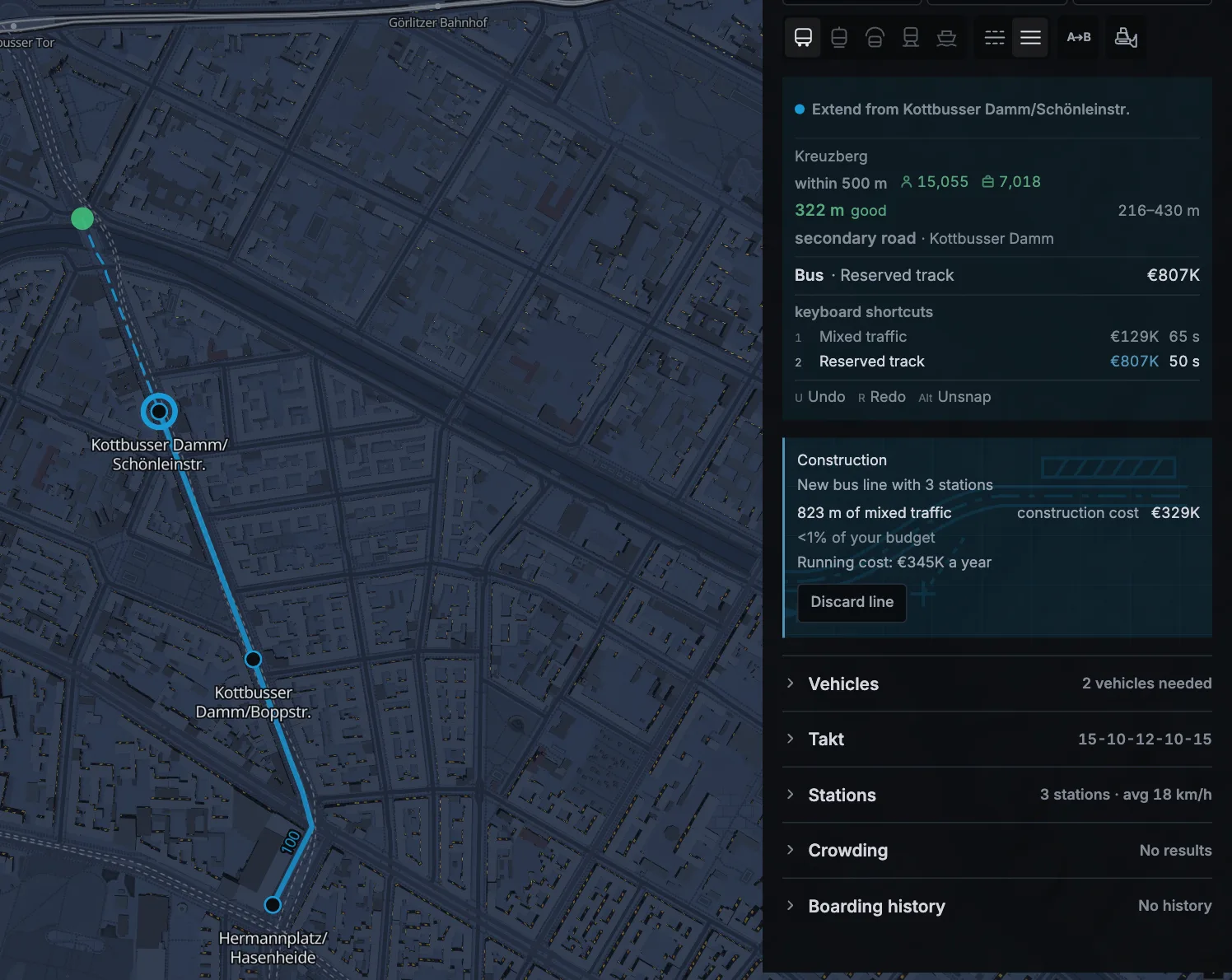
When you start building a bus line, you'll find three options in the icon list: Mixed traffic, Reserved track and A to B.
Mixed traffic means your buses share the road with cars. It's the cheapest option, but buses travel at an average speed of around 18 km/h.
Reserved track gives buses their own lane. This requires separate street construction, so it costs considerably more than mixed traffic. In return, buses can travel much faster, averaging up to 23 km/h.
So when should you use which option? Mixed traffic works well for shorter routes that bring people from a neighbourhood to a nearby station. For longer routes across the city, a reserved lane can save enough time to make the extra cost worthwhile.
There's another advantage: faster buses mean you need fewer vehicles to maintain the same takt.
Before you build, the card shows you the cost and expected travel time to the next station for both options. You can also switch between mixed traffic and reserved track at any time while building, either by clicking the icons or pressing the keyboard shortcuts 1 and 2.
Draw a route from A to B
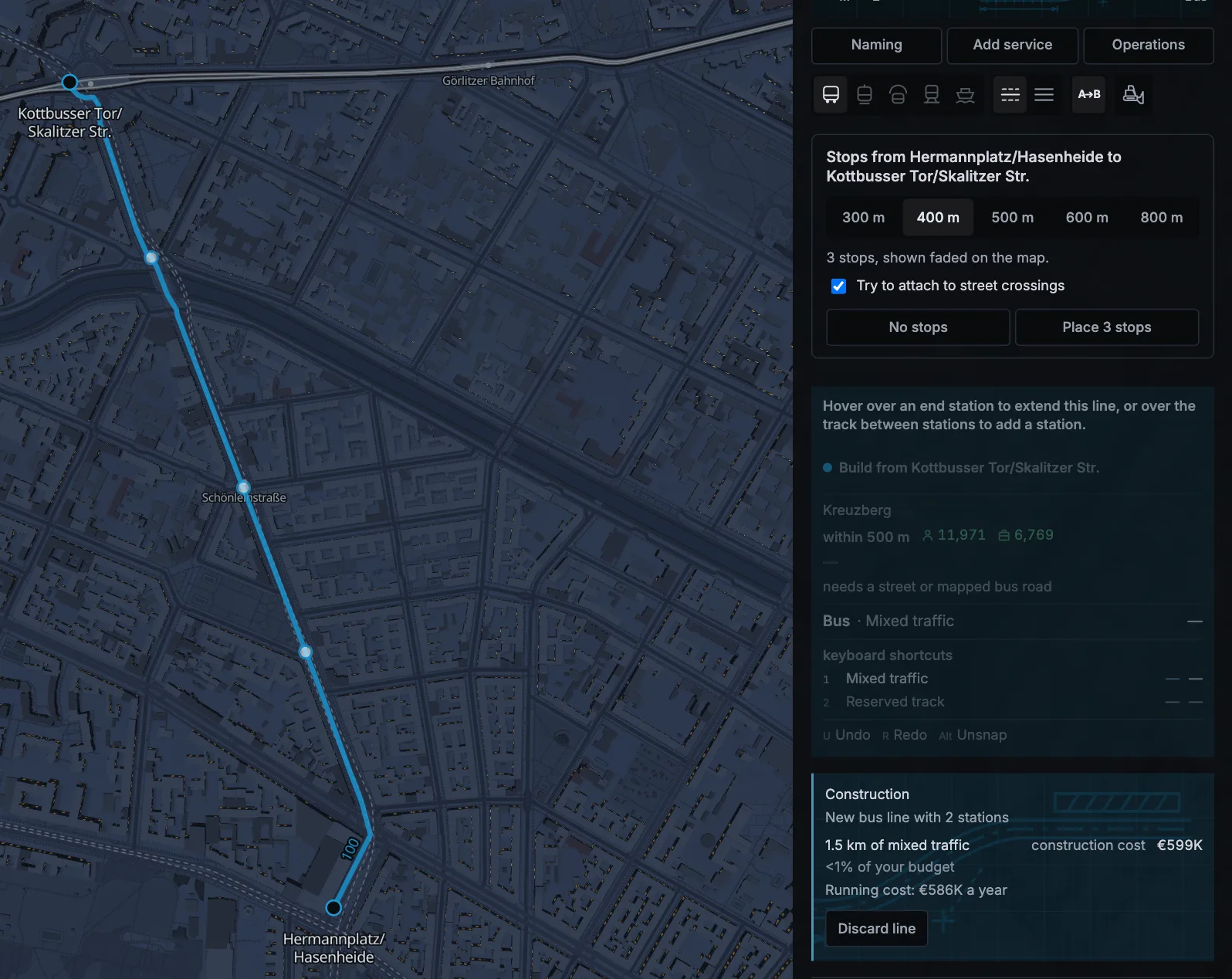
You don't have to place every station individually. Select A to B in the line card, then click where you want the route to start and where it should end. The game automatically finds a route along the streets.
You can choose how far apart the stops should be. When you're happy with the result, click Place stops to add them all at once.
Changed your mind? One undo removes the entire newly placed stretch.
Already have stations on your line? No problem. You can start from either end of your existing route.
Change the route
Want your bus to take a different street? Simply drag the planned route between two stations onto the street you'd prefer.
Once you've built that section, you can no longer drag it around. If you want to change it later, use the Bulldozer to remove the section and then build a new route across the gap.
See Change a line for more details.
Choose your buses
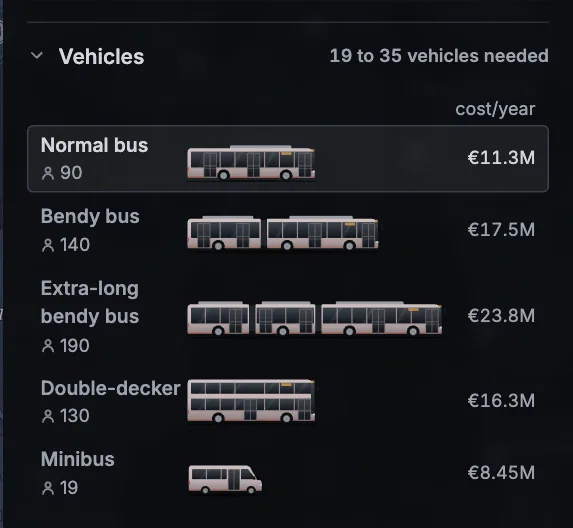
Every new bus line starts with a regular bus that holds 90 people. Open Vehicles in the line card to choose another type:
- Bendy bus: 140 people, with more doors for faster boarding.
- Extra-long bendy bus: 190 people, with even faster boarding.
- Double-decker: 130 people, but boarding takes longer because of the stairs.
- Minibus: 19 people, with seats only. It costs about a quarter less to run, but the driver costs the same. This means that a minibus every 10 minutes can actually cost more than a regular bus every 20 minutes.
Each vehicle option shows you how much the line will cost per year with that vehicle and your current takt.
When buses can't keep up
When a bus reaches 100% capacity, any passengers left behind take the car instead. Switch on Line loads to see where your buses fill up and how many more people want to board.
There are two ways to carry more passengers: run buses more often by adjusting the takt in the chart, or use bigger buses.
But there's a limit to how much you can get out of buses. If even a bendy bus every three minutes isn't enough, it might be time to consider a tram.
And what if hardly anyone uses your bus line? Switch on Demand streets again. Perhaps your stops are just one street away from where people live or want to go. Sometimes moving a stop a little can make quite a difference.