Upgrade a corridor with a tram
A tram is the next step when a bus corridor needs more capacity or a faster reserved route. It carries 250 riders, but its stops and track cost much more.
Start with a proven corridor
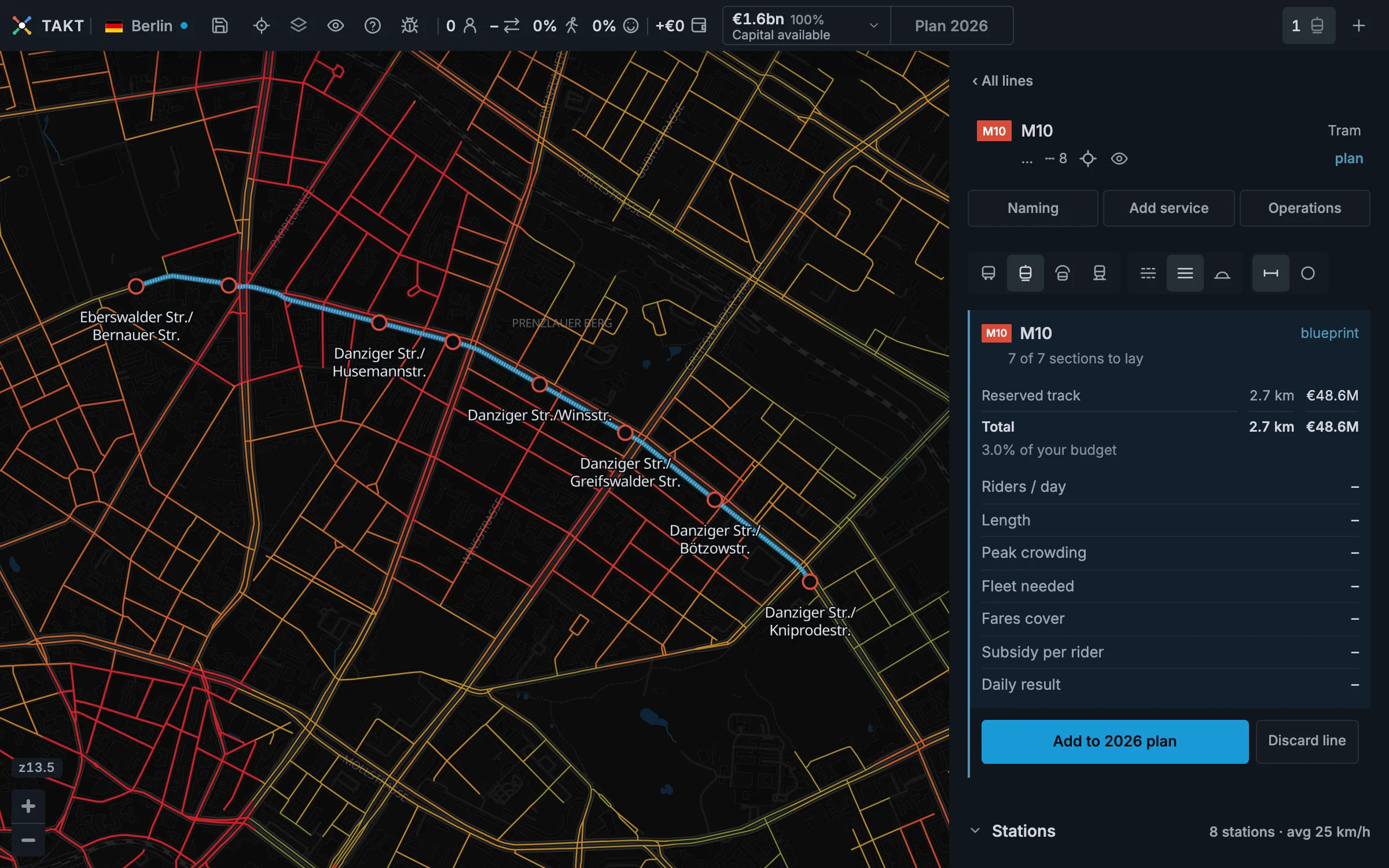
A tram is a large investment. Use the demand map and the result from a bus line to confirm that many riders need the corridor.
- Press + and choose Tram.
- Place the first stop on a main street near one end of the corridor.
- Place five to eight stops along the corridor.
- Keep about 400 to 700 metres between stops.
Read the next stop
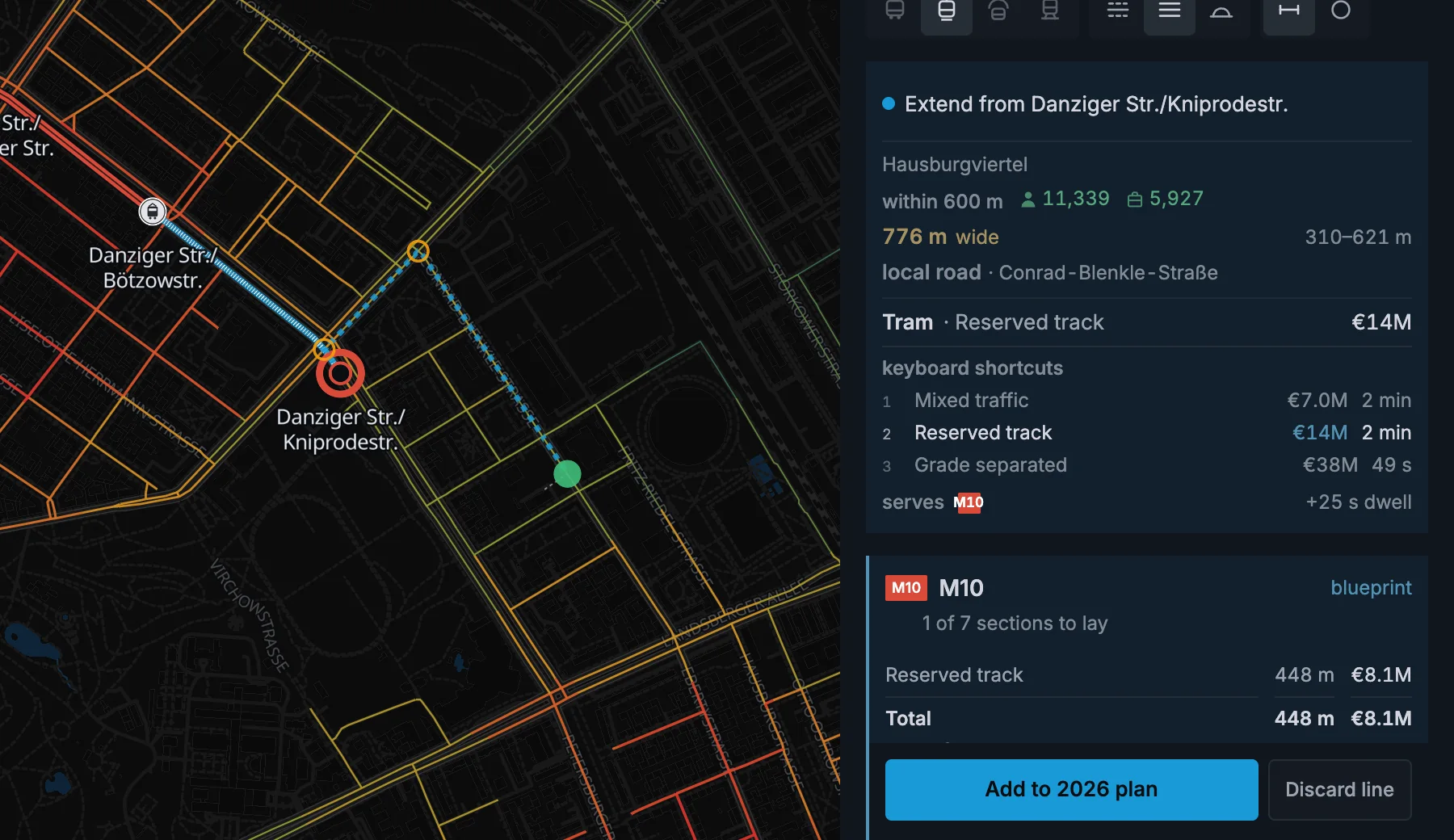
A street tram stop snaps to a suitable road. The blue preview shows the route before you click.
The spacing verdict changes from too close to tight, good, wide, and too far. Close stops slow the tram. Wide gaps make people walk farther.
Sharp turns slow trams down. Takt refuses a turn that is too tight.
Use Amsterdam's existing tram corridors
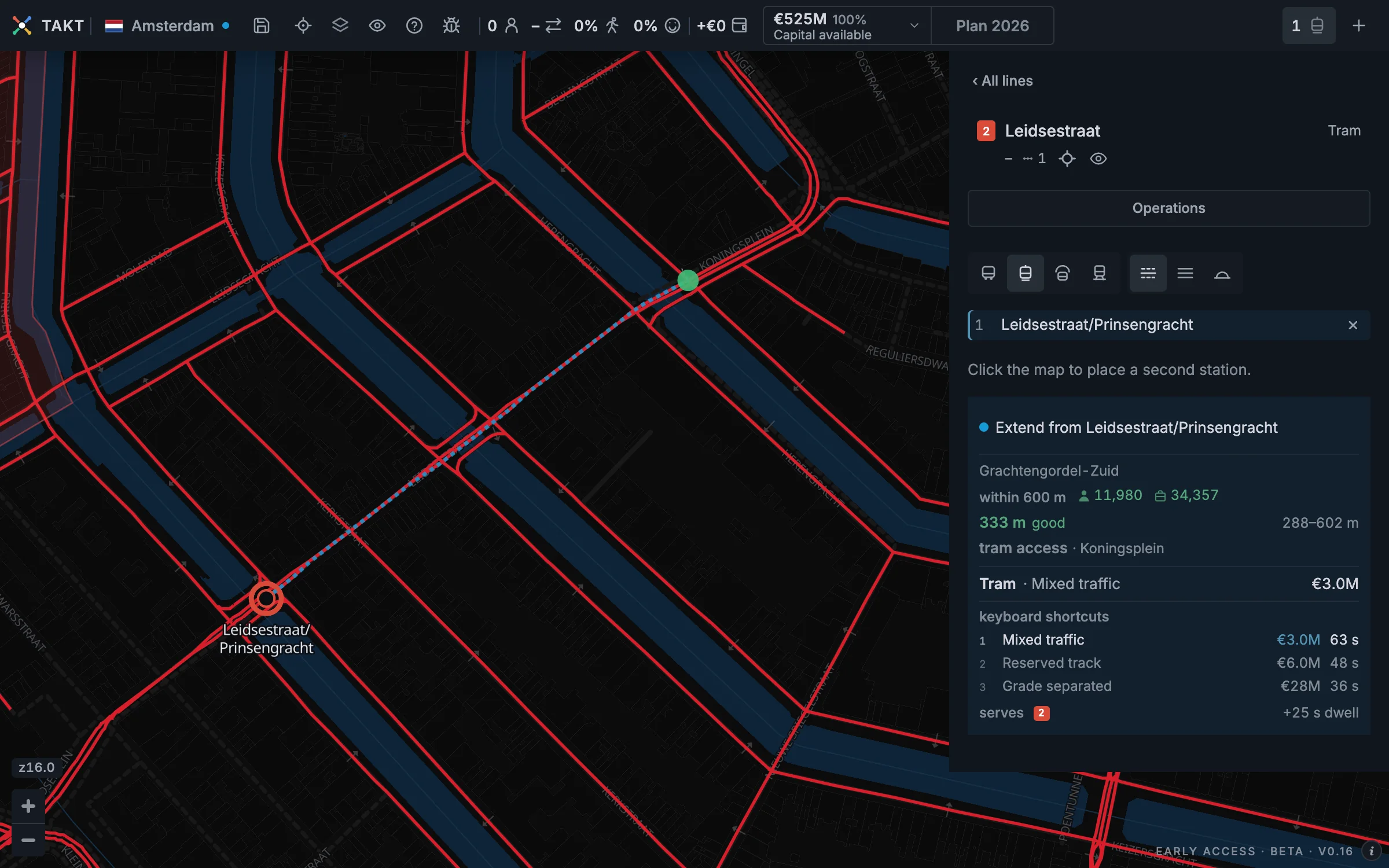
Amsterdam street trams can use mapped tram corridors as well as suitable roads. These include Leidsestraat, Utrechtsestraat, Marnixstraat, and Weteringschans.
Place stops along the corridor and read the blue route preview. Use Demand streets to inspect the demand along it.
The updated Amsterdam map also restores the tram connection at Linnaeusstraat / Wijttenbachstraat.
This additional tram access applies only in Amsterdam. Normal tram construction costs and turn limits still apply.
The existing corridor gives you a place to plan track. You still add the project to the year and pay to build it.
Choose what each section owns
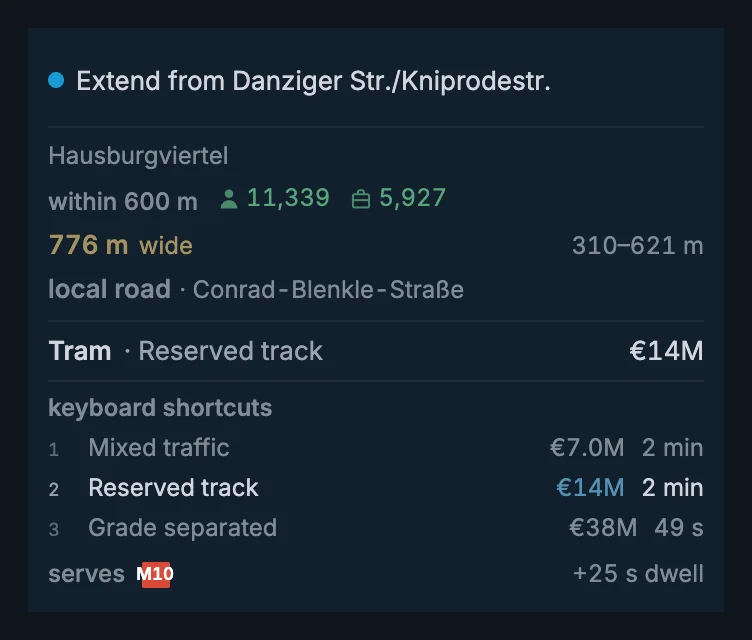
Each section can run with cars, in its own street lane, or on separate track. Choose before you build that section.
| Right of way | Speed | Build cost | What it means |
|---|---|---|---|
| Mixed traffic | 19 km/h | €9M/km | Runs in the street with cars |
| Reserved track | 25 km/h | €18M/km | Its own lane in the street |
| Grade separated | 33 km/h | €85M/km | Its own track away from streets |
Mixed traffic gives more capacity, but the tram stays in congestion. Reserved track costs more and gives the tram a faster, clear route.
Grade separated track is the fastest choice. It leaves the street and runs directly between stops, like a metro.
Changing a tram to a bus requires a usable road route. The bus can follow a different route from the tram track.
For a crowded service, read Takt advice before adding departures or extending platforms.
To remove built tram track, use Demolish section. The stations and timetable remain while you plan a replacement.
Read the experiment
Add the line to this year's plan, then finish the year. The line opens and the exact model shows whether the corridor justifies a tram.
If the tram fills, shorten the takt or lengthen its platforms. If it remains too full or too slow, test a metro.
Tram facts
| Tram stop | €2.5M |
|---|---|
| Capacity | 250 riders |
| Walk reach | 600 m |
| Fastest service | Every 3 min |
| Running cost | About €900/day per tram + €9/km |
Each stop starts with a 40 metre platform. You can lengthen it later for an extra cost.